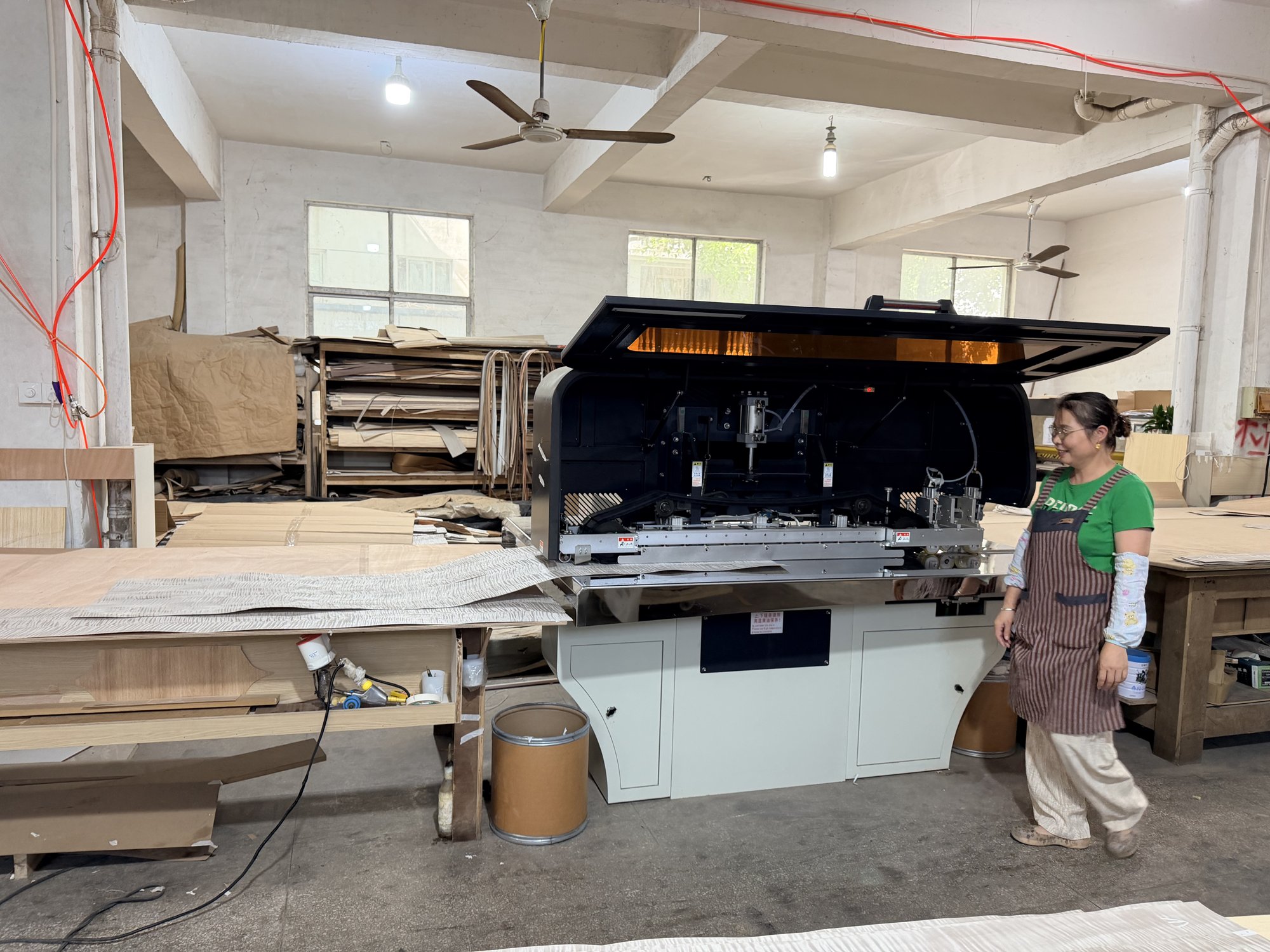
Precision veneer splicing meets patient hand veneering for natural surfaces with consistent grain flow and a low-sheen finish.
Natural wood veneer is a defining surface of Italian furniture. At LISNS, narrow veneer leaves are first joined into full-size sheets on dedicated splicing machines; temperature, adhesive line, and seam tension are controlled to keep joints tight. The sheet is then laid by hand onto the white body, with grain matched across adjacent parts. Multi-stage hand sanding and lacquer build a matte, tactile surface where natural grain remains visible and aligned.
From narrow veneer leaves to a finished Italian-style surface — machine splicing handles the precision, hand veneering and sanding carry the craft, and every piece passes inspection before it leaves the workshop.
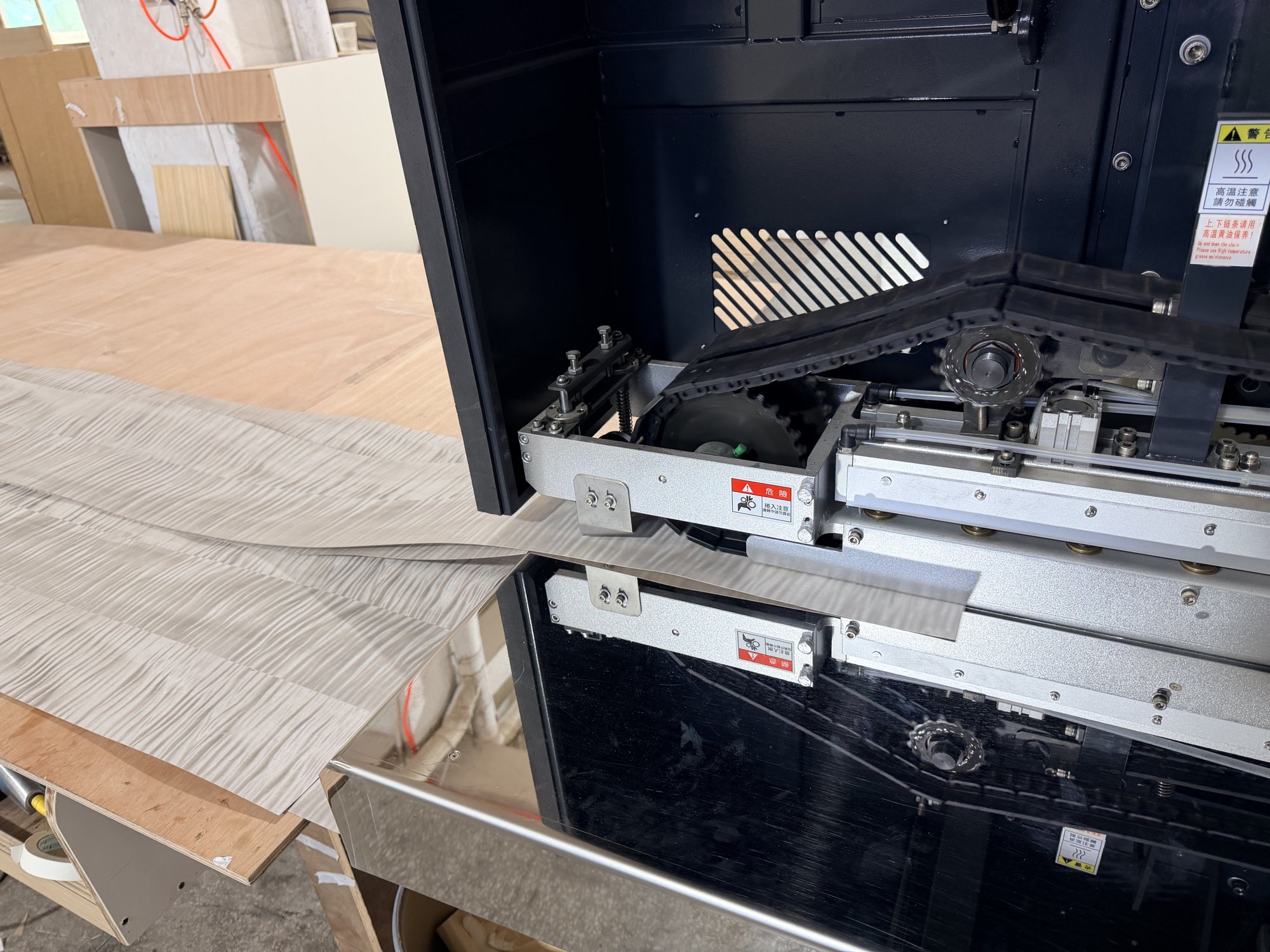
Veneer Splicing
Dedicated veneer splicing machines join narrow veneer leaves into full-size sheets. Temperature, adhesive line, and seam tension are automatically controlled so splice lines remain tight and stable for hand laying.
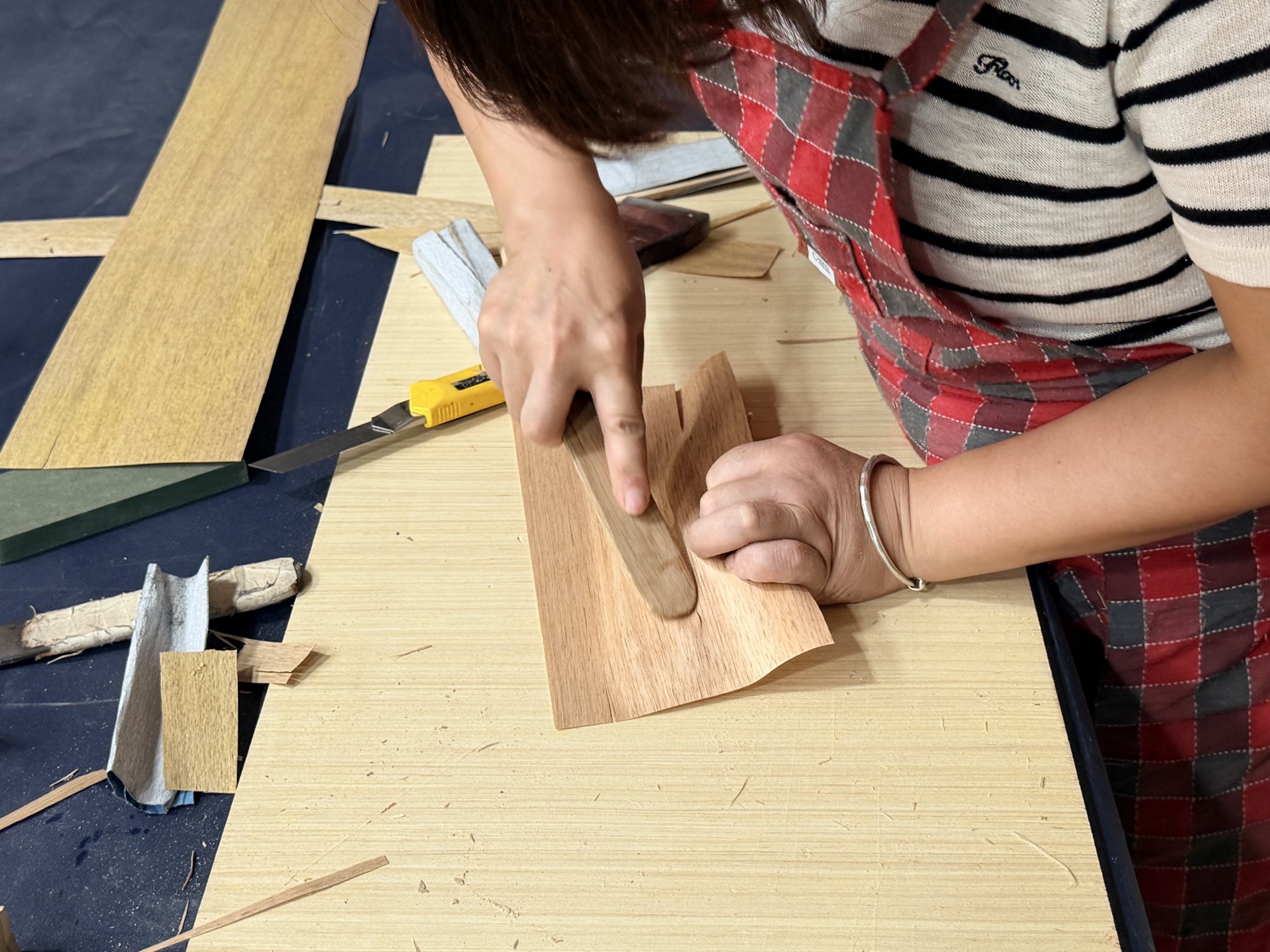
Hand Veneering
Spliced veneer sheets are applied by hand to the white body. Grain direction and pattern are matched across panels, doors, and drawers; flat, shaped, and curved surfaces are all handled manually.

Shaped & Curved Veneering
Curved and radius components are veneered by hand. The veneer is worked around corners and compound curves without creasing or splitting, keeping grain continuous over the form.
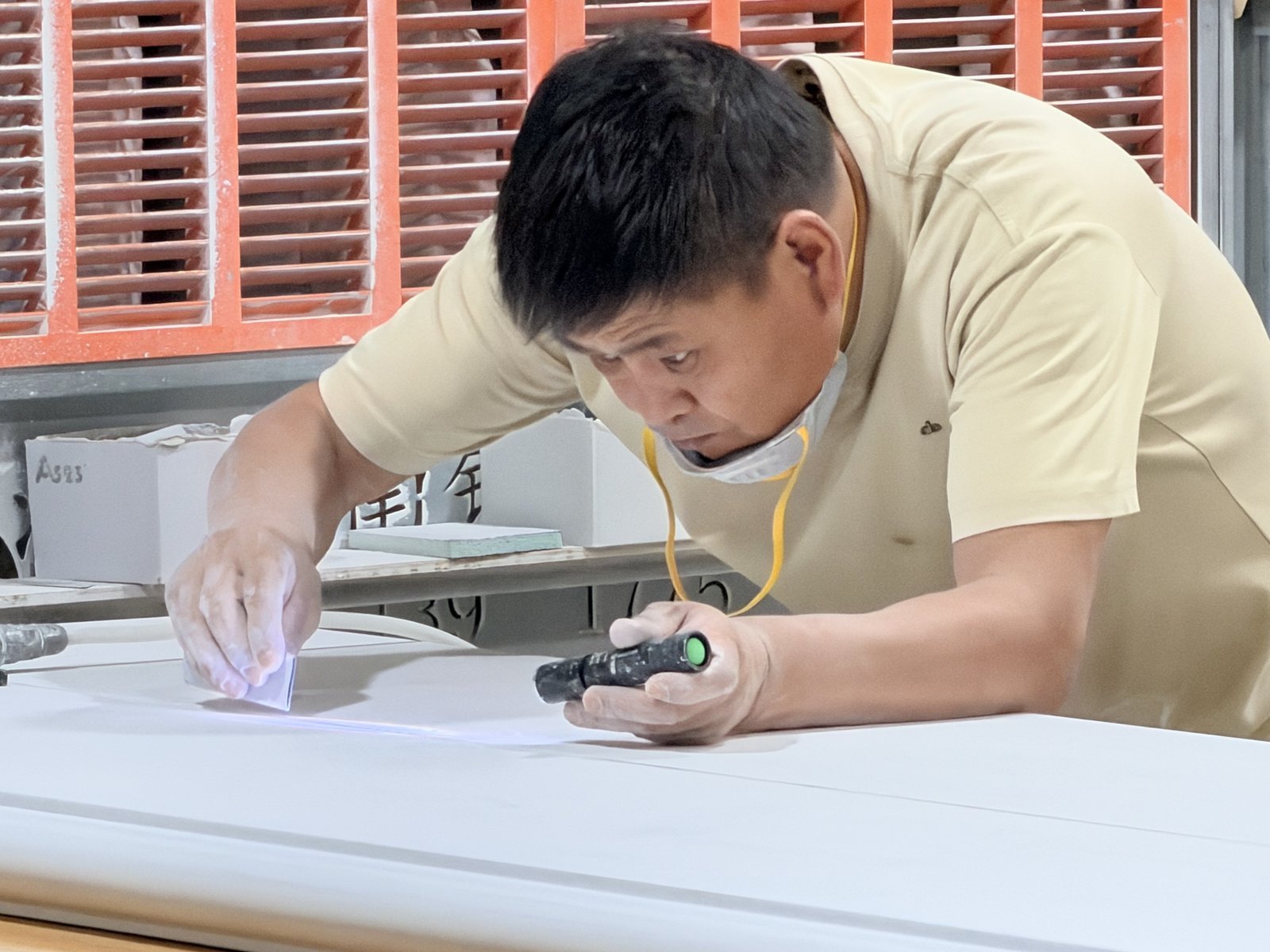
Multi-stage Sanding
Sanding is repeated between primer and topcoat layers, with each surface checked under inspection lighting. The aim is a flat, even base so the final lacquer film sits cleanly.

Dust-free Spraying
Lacquer is applied in a dust-free spray booth and cured in a temperature- and humidity-controlled drying room. Stable conditions help the finish harden evenly without trapped particles.

Inspection & Repair
Before packing, each piece is inspected by hand. Minor veneer or finish defects found at this stage are repaired in-house; pieces that do not pass inspection do not move to packaging.

Final Check & Protective Film
After a final three-person inspection, exposed surfaces are hand-fitted with protective film. The film keeps veneer and lacquer clean during transit and installation.
Natural wood veneer is used as the primary decorative surface, preserving real grain structure, mineral lines, and tonal variation across each production batch.
Grain-matched panels align veneer flow across tabletops, drawer fronts, and door panels for a continuous, considered visual rhythm.
Low-sheen lacquer finishes keep the veneer tactile, avoiding heavy film build-up so the natural wood surface remains visible.
 ®
®